






News & Insights
Stay Informed. Stay Connected.
Send Us A Message
What Is Glacial Acetic Acid Used for in Chemical Manufacturing?
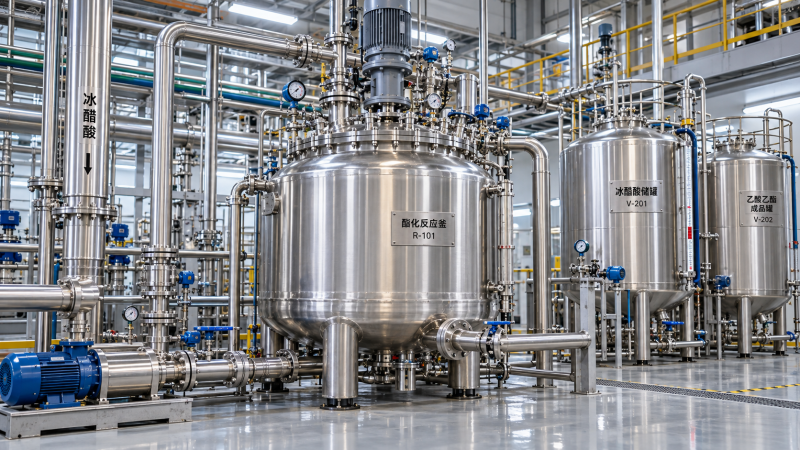
Glacial acetic acid is used in chemical manufacturing as a concentrated raw material, a solvent, and an acid for controlling or supporting reactions. It is a starting material for products such as vinyl acetate monomer and acetate esters, and it also appears in processes that make pharmaceuticals, dyes, and other specialty chemicals.
Its suitability depends on the job it must do. A manufacturer making an acetate ester needs acetic acid as a reactant, while another plant may use it to adjust acidity or dissolve materials during processing. Those roles call for different assessments of concentration, impurities, water content, and handling requirements.
What makes acetic acid “glacial”?
Glacial acetic acid is essentially concentrated acetic acid with very little water. The name comes from its tendency to form ice-like crystals when cooled. It is the same chemical substance found in vinegar, but vinegar is a much more dilute aqueous solution and is not an interchangeable industrial raw material.
The distinction matters because water can affect a chemical process. In some reactions, it changes the balance between reactants and products; in others, it can interfere with a moisture-sensitive ingredient or add to the work required during purification. Starting with concentrated acid gives a manufacturer more control over the amount of water introduced.
That does not mean the most concentrated material is always the best choice. If a process needs an aqueous acid solution for pH adjustment, buying concentrated acid and diluting it on site may add handling steps without improving the result. A suitable diluted grade can be more practical where water is already part of the formulation.
Major uses in chemical manufacturing
Vinyl acetate monomer for polymers
One of the largest applications of acetic acid is the production of vinyl acetate monomer, often shortened to VAM. In a common industrial route, acetic acid reacts with ethylene and oxygen over a catalyst. The resulting monomer is then used to make polymers and copolymers for products such as adhesives, paints, coatings, and certain packaging materials.
In this application, acetic acid is not simply present to make the mixture acidic. It contributes atoms to the vinyl acetate molecule and is consumed as part of the manufacturing process. Raw-material consistency matters because unwanted contaminants can affect catalysts, downstream separation, or product quality. The exact limits depend on the production technology and the manufacturer’s specifications.
Acetate esters used as solvents
Acetic acid can react with alcohols to form acetate esters. Ethyl acetate and butyl acetate are familiar examples used as solvents in coatings, inks, adhesives, and other formulations. The alcohol selected determines which ester is produced, while the reaction and purification conditions influence the quality of the final solvent.
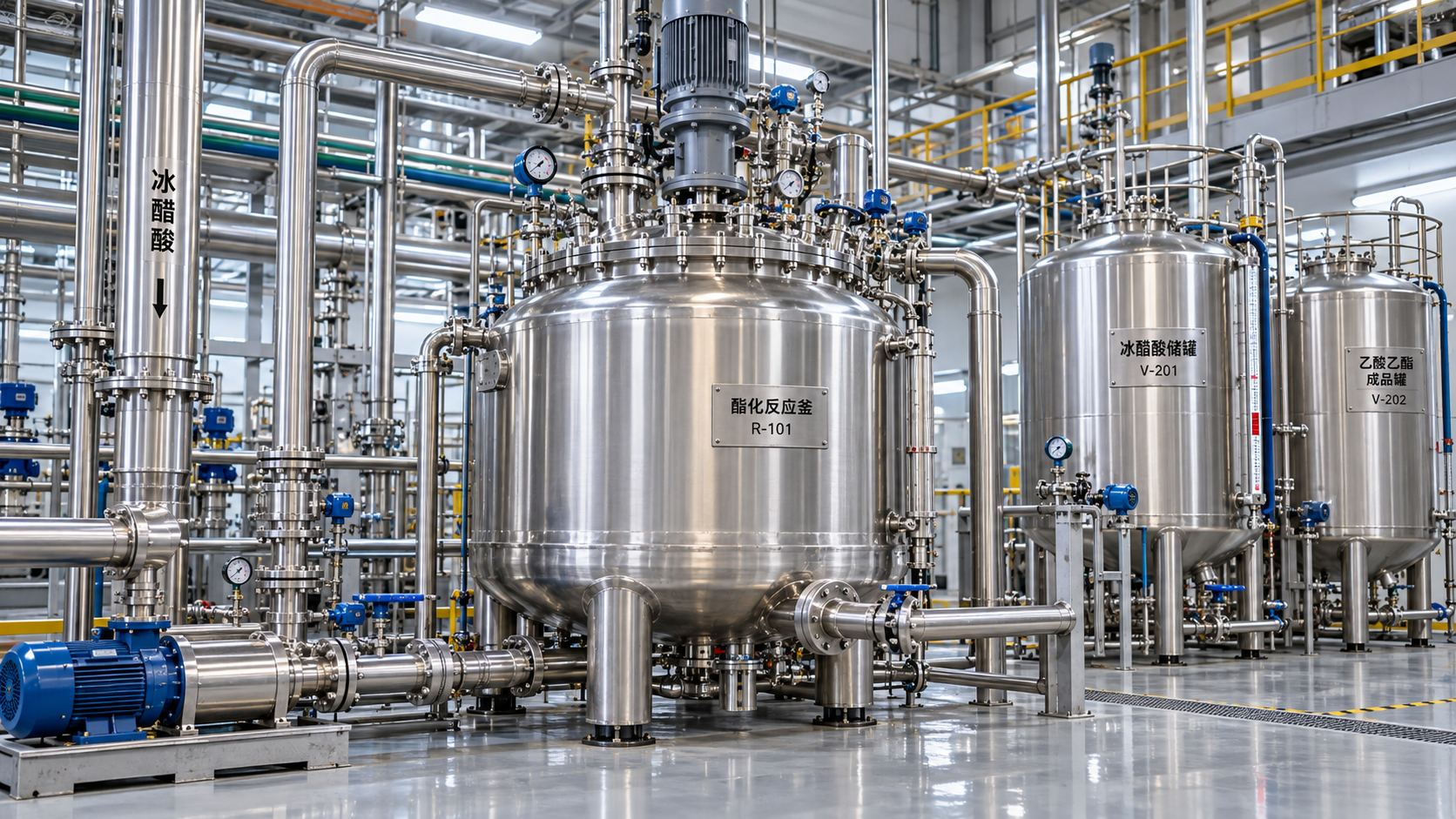
Water deserves attention in ester production. Conventional esterification produces water, and excess water can limit conversion by shifting the reaction equilibrium. A concentrated acid feed can therefore be useful, although the overall result also depends on how the process manages water, recovers unreacted materials, and purifies the ester.
This is an example of why the intended use matters more than a generic description such as “high purity.” A feed suitable for a less demanding application may introduce impurities that are difficult to remove from a solvent intended for a sensitive formulation.
Acetic anhydride and cellulose acetate
Acetic acid is also involved in the manufacture of acetic anhydride, an acetylating agent used to introduce acetyl groups into other molecules. Acetic anhydride is used, for example, in making cellulose acetate, a material used in products such as fibers, films, and molded items.
Acetic acid can also serve as a solvent or processing medium in cellulose acetate production, depending on the process. Its role should not be confused with that of acetic anhydride: the two chemicals are related, but they are different substances and are not automatically interchangeable.
Pharmaceutical and specialty chemical intermediates
In pharmaceutical manufacturing, acetic acid may be used as a reactant, solvent, or pH-adjusting agent during the production of active ingredients and intermediates. It can help create acetate salts or provide the acidic conditions needed for a particular reaction or purification step.
Its role depends on the process stage. Acid used early in a synthesis may have different impurity requirements from material that contacts a final product. A concentrated industrial grade is not automatically suitable for pharmaceutical use merely because its acetic acid content is high. The required grade, trace impurities, documentation, and applicable quality controls depend on the intended application.
Similar distinctions apply in pesticide and other specialty chemical production. Acetic acid may become part of an intermediate, help control reaction conditions, or be used during work-up. The process recipe determines which function matters and which specifications need close attention.
Dyes, pigments, and textile chemicals
Acetic acid is used in the manufacture and processing of some dyes and pigments, as well as in textile operations that require an acidic environment. Adjusting pH can influence how a reaction proceeds or how a dye behaves during application. In other cases, the acid is used to neutralize alkaline residues from a preceding step.
The appropriate concentration depends on the operation. For a water-based textile bath, a controlled diluted solution may be more useful than introducing concentrated acid directly. For chemical synthesis, lower water content or tighter impurity limits may matter more. In either case, the pH target should come from the process requirements, not from the assumption that adding more acid will improve the result.
When is it a reactant, and when is it a processing aid?
The distinction helps explain why the same chemical can be purchased under different specifications. As a reactant, acetic acid participates in a reaction and contributes to the chemical structure of a product. Vinyl acetate and acetate ester production are examples. Its concentration affects how much usable reactant enters the process, while impurities may influence reaction performance or product quality.
As a solvent, its main function is to provide a medium in which ingredients dissolve or react. Solvent purity, water content, compatibility with the mixture, and ease of recovery can all matter. Some processes recover and reuse acetic acid, but reuse requires control of the contaminants and water that accumulate during processing.
As a processing aid, it may adjust pH, neutralize a material, or support a separation step without being intended as a major component of the final product. Even then, residual acid or by-products can affect the next operation. For example, neutralizing an alkaline stream produces acetate salts; the effect of those salts on downstream equipment, wastewater treatment, or product quality should be considered as part of the process design.
Why concentration and impurities matter
A product description alone does not establish whether a batch is suitable for a particular process. A useful starting point is the material specification: how much acetic acid is present, how much water is allowed, and which impurities are controlled. The relevant impurities vary with the application, but may include substances that affect color, odor, catalysts, reaction selectivity, or the purity of a downstream product.
Consider two different uses. A manufacturer producing a solvent may be concerned about impurities that carry through distillation or change the final solvent’s odor. A plant using acid to neutralize an industrial process stream may care more about consistent concentration and compatibility with downstream treatment. The same material is not necessarily the right choice for both.
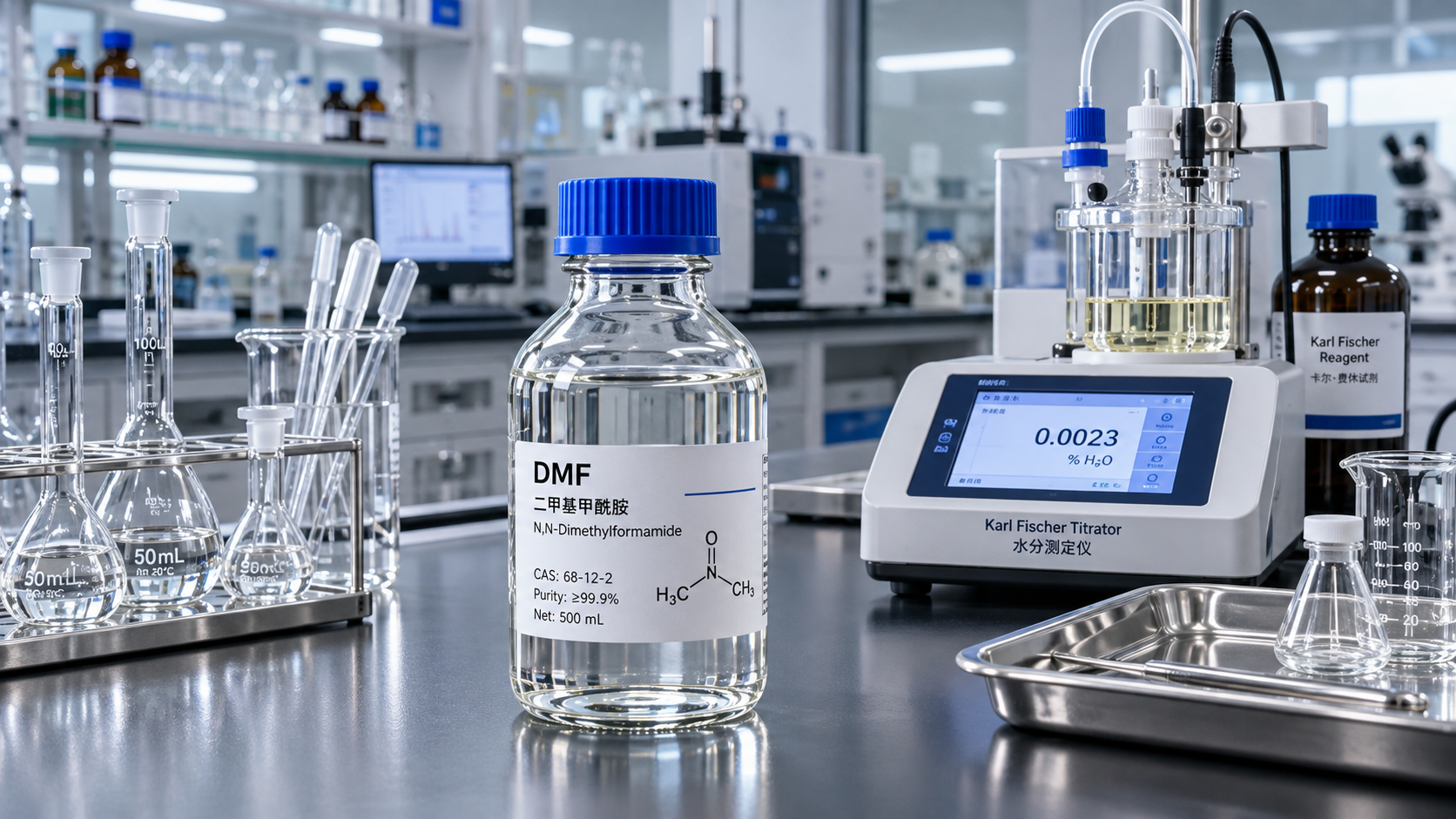
Water content can also change during storage and handling. Acetic acid mixes readily with water, so exposure to moisture or accidental mixing can alter the feed concentration. Where water content is significant to the reaction, closed handling and appropriate sampling procedures help preserve the value of the original specification.
A certificate of analysis provides batch-specific results for the tests listed on it. It is most useful when compared with the process specification: a certificate showing only acid concentration cannot establish compliance with an impurity limit that was not tested.
Can a diluted acid replace glacial acetic acid?
Sometimes. For pH adjustment, cleaning steps, or water-based processing, a diluted acetic acid solution may provide the required acidity with a lower concentration of corrosive material at the point of use. The process still needs a defined concentration and a controlled dosing method, because changes in acid strength affect the amount required.
Substitution is less straightforward in synthesis. Water introduced with a diluted feed can reduce conversion in some equilibrium reactions, affect sensitive reagents, increase the load on separation equipment, or change the composition of a solvent mixture. Even where the chemistry tolerates water, the larger liquid volume may affect tank capacity and production scheduling.
Concentrated acid is therefore useful when low water input, controlled formulation, or efficient feed handling matters. It is not inherently better for every operation. The comparison should include the complete process: reaction requirements, dilution equipment, storage, transport, and waste handling.
Handling and storage considerations
Glacial acetic acid is corrosive and can cause serious skin and eye burns. Its vapors can irritate the respiratory tract, and the concentrated liquid is combustible. Handling arrangements should address both exposure and fire hazards, using the product’s safety data sheet and the site’s established procedures.
For manufacturing facilities, practical controls include compatible, properly labeled containers; suitable ventilation; equipment designed for corrosive liquids; spill containment; and appropriate personal protective equipment. Storage plans should also account for incompatible substances, including strong oxidizers and bases. Materials of construction need to be selected for the actual acid concentration and operating conditions, not simply assumed suitable because they work with dilute acid.
Crystallization in cold conditions can interrupt pumping or transfers. When solidification is possible, storage and transfer systems need a temperature-management plan that avoids unsafe heating and protects container integrity. Crystals do not turn the material into a different chemical, but changes in physical state can complicate sampling, flow, and inventory management.
Dilution also generates heat. Where an aqueous solution is required, use a controlled dilution procedure with compatible equipment, mixing, and cooling as needed. Adding acid to water slowly is a common safety practice; the exact procedure should follow the site’s risk assessment and operating instructions.
What to establish before selecting a supply
Start with the function of the acid in the process. Then define the concentration and water limits, identify impurities that could affect the reaction or final product, and determine what batch documentation is needed. For regulated or sensitive applications, include the relevant grade and quality requirements from the beginning rather than trying to infer suitability from a general industrial label.
Packaging and delivery also affect the decision. A facility using a small quantity for specialty synthesis has different storage and transfer needs from a plant receiving a continuous bulk supply. Container compatibility, closed-transfer capability, temperature exposure, and the ability to manage spills should be considered alongside the material specification.
Shandong Junzheng Chemical lists glacial acetic acid among its chemical raw materials. For a supply inquiry, a useful starting point is to provide the intended application, required concentration and impurity limits, expected quantity, packaging preference, and any documentation needs. That information makes it easier to assess whether the available material fits the process rather than relying on the product name alone.
Send Us Your Inquiry Today