






Navigation
Send Us A Message
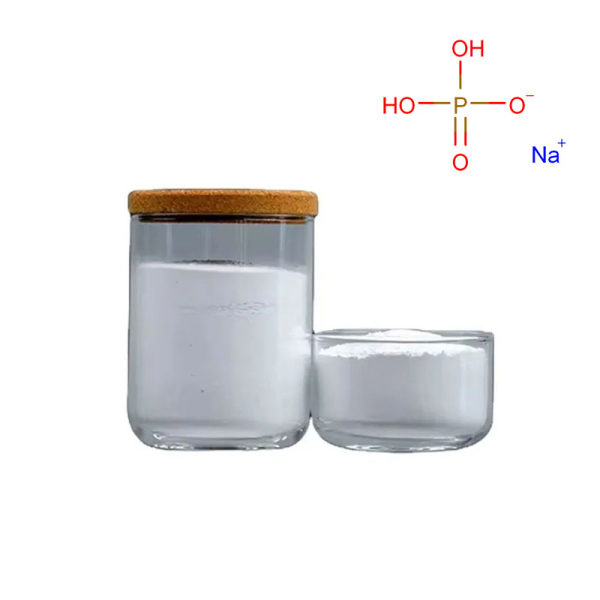
Sodium phosphate monobasic CAS#7558-80-7
Sodium phosphate monobasic<br/>w; h; i; t; e; ; p; o; w; d; e; r; ; o; r; ; g; r; a; n; u; l; e; s; ;; ; c; o; l; o; r; l; e; s; s; ; t; o; ; w; h; i; t; e; ; c; r; y; s; t; a; l; s; ; o; r; ; c; r; y; s; t; a; l; l; i; n; e; ; p; o; w; d; e; r<br/><br/>Monobasic sodium phosphate forms acidic aqueous solutions and is poorly soluble in ethanol. The source distinguishes anhydrous powder or granules from crystalline hydrated forms. Its application areas include buffering, analytical reagents, sequestration, emulsification and dye mordanting. Additional industrial uses extend to ceramics, enamels, detergents and boiler chemicals, with the required hydration state determined by the particular formulation.
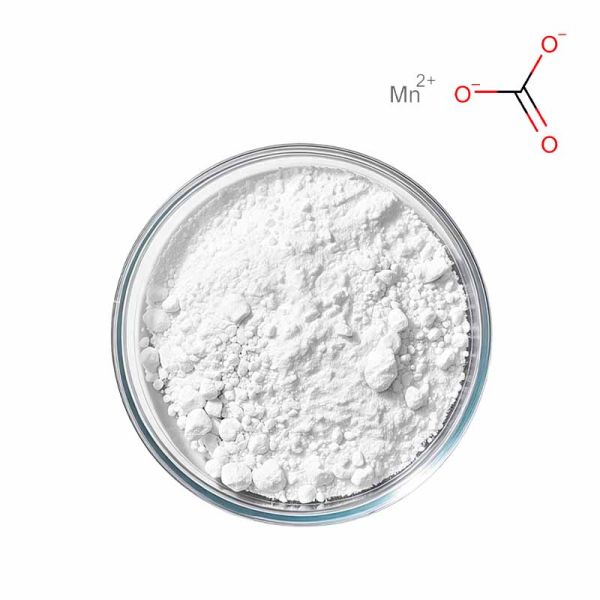
Manganese Carbonate CAS#598-62-9
Manganese Carbonate<br/>Manganese(II) carbonate<br/>MnCO₃•H₂O<br/>p; a; l; e; ; p; i; n; k; ; p; r; e; c; i; p; i; t; a; t; e; ;; ; m; o; n; o; h; y; d; r; a; t; e<br/><br/>Manganese carbonate is a manganese compound associated with the mineral rhodochrosite and obtainable synthetically as a pale pink precipitate. The supplied preparation specifically describes a monohydrate form. Industrial applications include manganese-containing fertilizer formulations, ceramic glaze coloration and fluxing, and concrete staining, making it relevant where a manganese source is required for agricultural or materials processing.
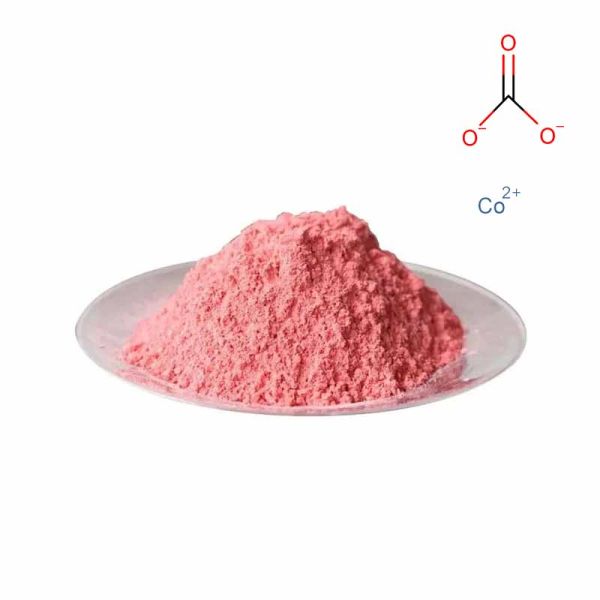
Cobalt Carbonate CAS#513-79-1
Cobalt Carbonate<br/>Cobalt(II) carbonate<br/>CoCO₃<br/>r; e; d; d; i; s; h; ; p; a; r; a; m; a; g; n; e; t; i; c; ; s; o; l; i; d; ;; ; r; e; d; -; t; o; -; p; i; n; k; ; m; i; n; e; r; a; l<br/><br/>Cobalt carbonate is a reddish, paramagnetic cobalt compound occurring naturally as spherocobaltite. It serves as an intermediate in hydrometallurgical cobalt processing and as a precursor for other cobalt salts and catalysts. Typical applications include ceramic materials, inorganic pigments and temperature indicators, with additional use as a cobalt source in selected agricultural and animal feed formulations.
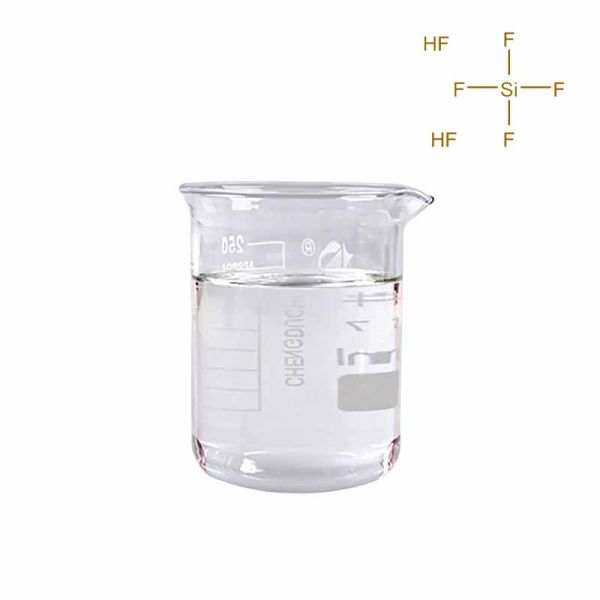
Hexafluorosilicic acid CAS#16961-83-4
Hexafluorosilicic acid<br/><br/>Hexafluorosilicic acid is an inorganic acid used as a fluoride-containing feedstock in chemical manufacture. It supports production of aluminum fluoride, cryolite and hexafluorosilicate salts, alongside selected water treatment applications. Its chemical reactivity also supports selective cleavage of silicon–oxygen bonds in silyl ethers, while other identified uses include wood preservation and calcium carbonate surface modification.
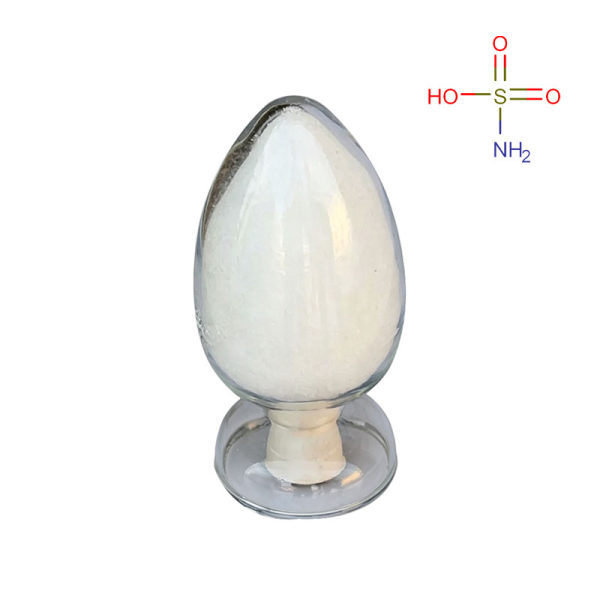
Sulfamic acid CAS#5329-14-6
Sulfamic acid<br/>w; h; i; t; e; ; f; l; a; k; y; ; c; r; y; s; t; a; l; l; i; n; e; ; s; o; l; i; d<br/><br/>Sulfamic acid is an odorless, nonvolatile white crystalline solid that dissolves readily in water to produce strongly acidic solutions. It is used in chemical cleaning to remove carbonate and phosphate scale and eliminate nitrite residues. As a synthesis reagent and catalyst, it also supports quinoline preparation, ketoxime rearrangement and multicomponent routes to aminophosphonate compounds.
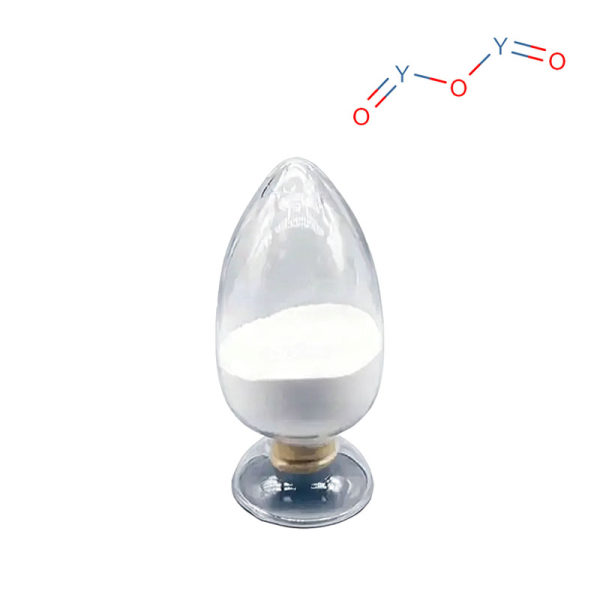
Yttrium oxide CAS#1314-36-9
Yttrium oxide<br/>w; h; i; t; e; ; p; o; w; d; e; r; ,; ; s; i; n; t; e; r; e; d; ; t; a; b; l; e; t; s; ,; ; a; n; d; ; c; h; u; n; k; s<br/><br/>Yttrium oxide is a white rare-earth material supplied as powder, sintered tablets or pieces. Its high-temperature stability supports laboratory crucibles and specialized melting operations. Sintered material is used in evaporation and sputtering processes for hard films, dielectric layers and capacitor components. Additional applications include electronic ceramics, spinel formation and yttrium-iron garnet materials for microwave filters.
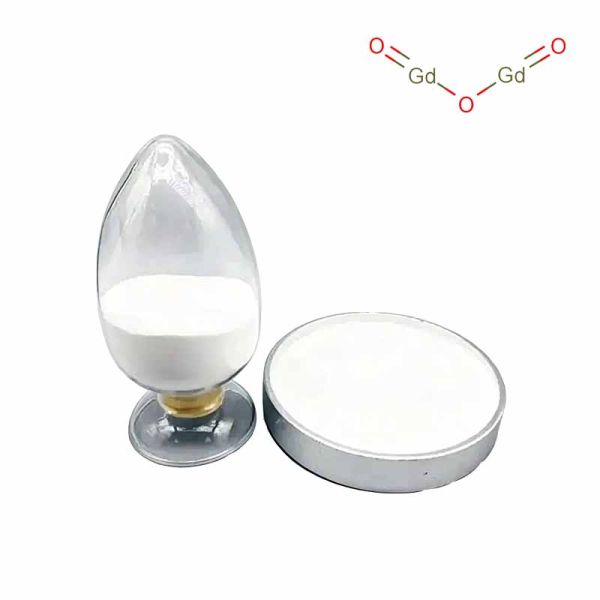
Gadolinium oxide CAS#12064-62-9
Gadolinium oxide<br/><br/>Gadolinium oxide, also called gadolinia, is a thermally stable rare-earth oxide with low solubility. It is used in optical glass, ceramics, phosphors and magnetic materials, and as a feedstock for gadolinium-yttrium garnets. Further applications include neutron absorption, chemical catalysis and ceria-based electrolyte materials, linking its thermal behavior with optical, nuclear and electrochemical material functions.
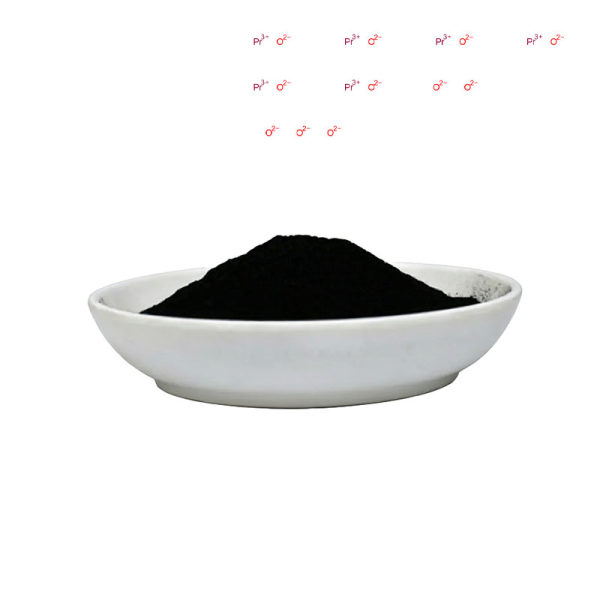
Praseodymium oxide CAS#12037-29-5
Praseodymium oxide<br/>d; a; r; k; ; b; r; o; w; n; ; p; o; w; d; e; r<br/><br/>Praseodymium oxide, or praseodymia, is a dark brown rare-earth powder that is insoluble in water but soluble in strong acids. Its chemical stability, thermal behavior and redox reactivity support ceramics and electronic materials. Typical applications include didymium glass, welding-goggle coloration and praseodymium yellow pigments, with additional interest in ionic-conducting materials for electrochemical systems.
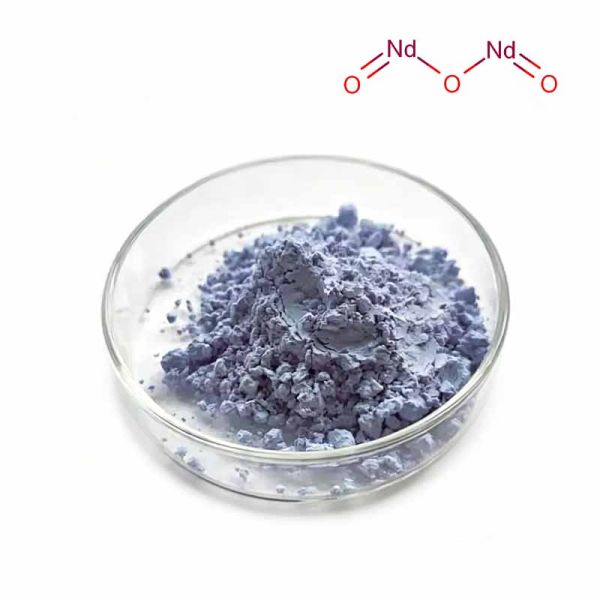
Neodymium oxide CAS#1313-97-9
Neodymium oxide<br/>Nd₂O₃<br/>b; l; u; e; -; g; r; a; y; ; p; o; w; d; e; r<br/><br/>Neodymium oxide is a blue-gray rare-earth powder with a hexagonal crystal structure and faint red fluorescence. It absorbs atmospheric moisture and carbon dioxide, is insoluble in water and dissolves in acids. Glass and ceramic applications exploit its blue-to-lavender coloration and lighting-dependent color effects; further uses include capacitors, lamp electrodes and dehydrogenation catalysts.
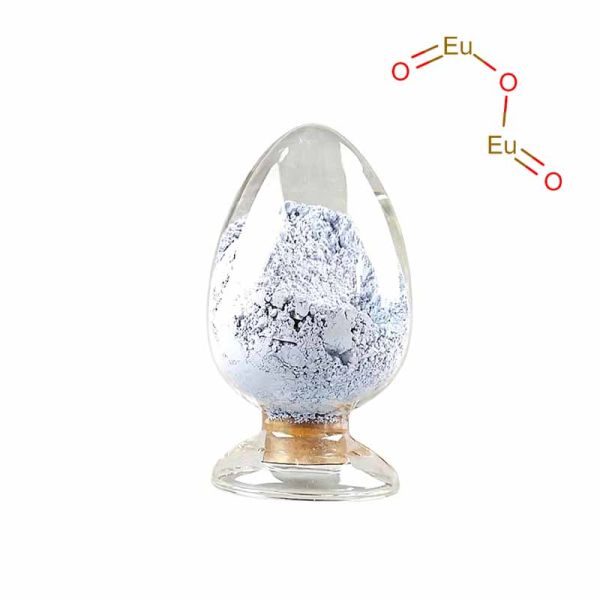
Europium Oxide CAS#1308-96-9
Europium Oxide<br/>Eu₂O₃<br/>w; h; i; t; e; ; t; o; ; p; a; l; e; ; p; i; n; k; ; p; o; w; d; e; r<br/><br/>Europium oxide is a white to pale pink, hygroscopic rare-earth powder with crystal forms influenced by calcination conditions. It is insoluble in water but dissolves in inorganic and selected organic acids. Used in phosphor systems for red luminescence, fluorescent lighting and laser-related materials, it also has neutron-absorbing applications in nuclear reactor control components.
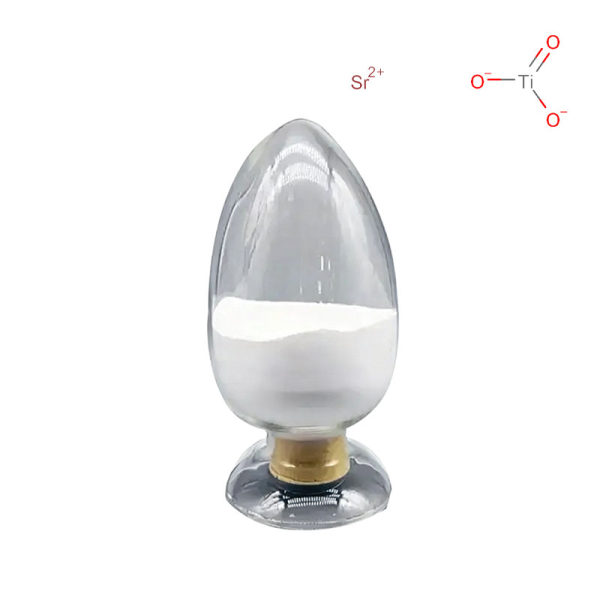
Strontium Titanate CAS#12060-59-2
Strontium Titanate<br/>SrTiO₃<br/><br/>Strontium titanate is an oxide ceramic used as a model material for perovskite research. Its temperature-dependent crystal behavior and electronic material functions support tunable microwave capacitors, thermistors, varistors and semiconductive ceramics. Other identified applications include display technologies, pyroelectric infrared detectors and low-temperature instrumentation, where its structural and functional properties are relevant to specialized device development.
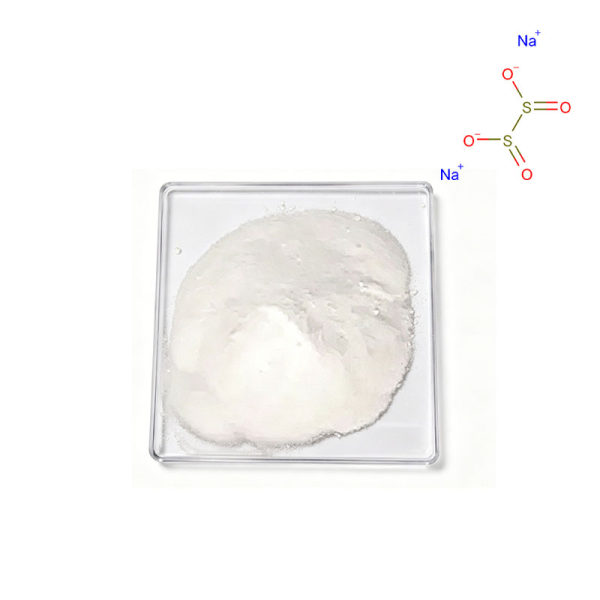
Sodium dithionite CAS#7775-14-6
Sodium dithionite<br/>sodium hydrosulfite<br/>sodium hydrosulphite<br/>sodium sulfoxylate<br/>sulfoxylate<br/><br/>Sodium dithionite, commonly called sodium hydrosulfite, is a strong reducing agent with marked oxygen reactivity. Its reduction and decolorization behavior supports textile dyeing, pulp bleaching and removal of iron-related stains. Additional uses include boiler oxygen scavenging, water treatment, photographic processing, leather and polymer manufacture, gas purification and chemical processing requiring controlled reducing conditions.
Send Us Your Inquiry Today